
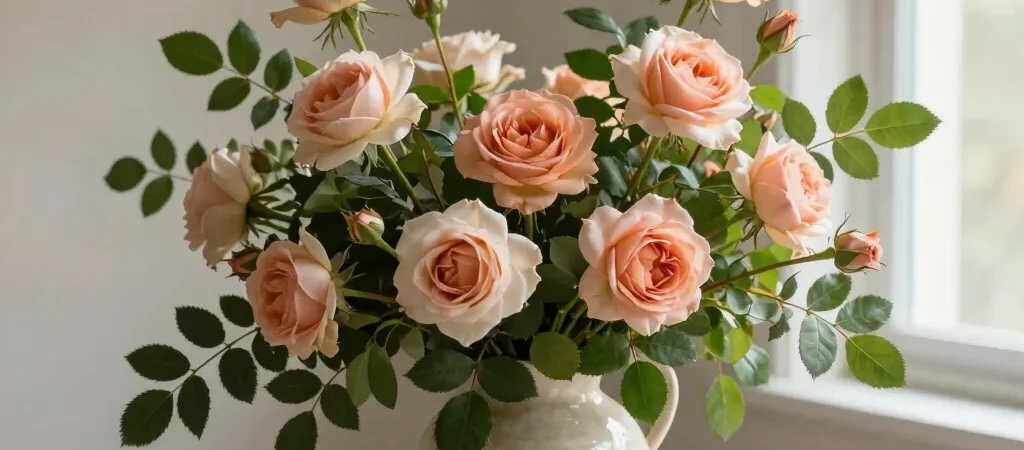
Traditional arrangement methods often force stiff symmetry upon flowers that naturally seek light in fluid, winding paths. Modern floral design honors the organic habit of the stem, allowing garden-grown blooms to lean, arch, and overlap gracefully. By observing how roses stretch across garden trellises, designers can recreate that same breathtaking spontaneity in table arrangements.
Building Sustainable Mechanics with Pin Holders
Ditch non-biodegradable floral foam in favor of reusable brass Kenzan pin frogs anchored inside low ceramic bowls. Layering flexible wire mesh above the pin frog provides structural support while preserving generous water reservoirs for thirsty rose stems. This classic mechanic grants complete freedom over stem angles, allowing heavy double blooms to sit securely at low inclinations.
Composing Layered Heights and Negative Space
Begin your arrangement with a structural base of textural greenery and secondary garden stems to establish dynamic boundaries. Place your hero rose blooms at varying depths and focal lengths, ensuring no two flowers rest on identical horizontal planes. Leaving intentional negative space between ruffled petals allows each individual cultivar profile to be appreciated in full light.